Showing posts with label Honda Hydrogen. Show all posts

Honda opens first UK hydrogen filling station

Awesome!
Honda has opened the first open access refuelling site for hydrogen powered vehicles at it’s manufacturing facility in Swindon. It’s open to anyone developing or using hydrogen powered vehicles, and will fill to 350 and 700 bar, the two standard filling pressures adopted by major manufacturers.

The aim behind the site is to encourage the development of hydrogen powered vehicles, including Honda’s own FCX Clarity. Hydrogen powered vehicles offer the same benefits as electric vehicles but with the advantages of improved range and no slow recharge time.

Thomas Brachmann, Head of Electrical Powertrain R&D at Honda, commented: “Hydrogen fuel cell technology is the ultimate transport solution; meeting environmental demands but also delivering the range and performance that customers expect.

“The cooperation on this project between vehicle manufacturers like Honda, infrastructure providers like BOC and the public sector can be a blueprint for future development.”

Source;
http://www.honestjohn.co.uk/news/green-motoring/2011-09/honda-opens-first-uk-hydrogen-filling-station/

Honda FCX Clarity heads Glasgow hydrogen conference

Fresh from its appearance at Ecovelocity last week, the FCX Clarity is now making a star appearance in Scotland, appearing at the World Hydrogen Technologies Conference in Glasgow.

One of only a handful of series production hydrogen fuel cars in the world, the Honda-made car became the very first such car to enter production back in 2008. Currently available on a limited lease programme in the US and Japan, the car will now appear in Glasgow between September 14 and 18th, as the conference explores the future of a hydrogen economy.

Welcoming more than 150 leading hydrogen experts from around the world, the conference’s major theme this year is ‘Renewables to Hydrogen’ exploring the opportunities to create a clean, sustainable hydrogen economy from the many forms of available renewable energy. This is particularly relevant to Scotland and to the UK, given the substantial wind, wave and tidal resources available.

The conference was opened by Fergus Ewing, Scotland’s Minister of Energy, Enterprise and Tourism, (pictured) who fully endorsed the drive to renewable energy and cleaner fuels.

The Honda FCX Clarity works like an electric car with hydrogen creating the electric on-board through a ‘fuel cell stack’. The stack creates electricity from a reaction between hydrogen and atmospheric oxygen. This reaction produces only one emission; pure water which comes out of the tailpipe in the form of vapour. If hydrogen can be produced for commercial use from clean sources such as wind power then cars such as the Honda FCX Clarity can truly become zero harmful emissions.

Hydrogen cars depend on a hydrogen refuelling infrastructure however, currently absent in the UK. In response to this, Honda, in cooperation with BOC and Forward Swindon- are launching the UK’s first public hydrogen refuelling station, just off the M4, at Honda’s Swindon car plant, on September 20.

Source;
http://www.thegreencarwebsite.co.uk/blog/index.php/2011/09/15/honda-fcx-clarity-heads-glasgow-hydrogen-conference/

Honda FCX Clarity debuts in UK at the EcoVelocity Show


by Abhishek Chaliha

The hydrogen powered next generation Honda FCX Clarity has been around for a couple of years now and it makes electric cars look like dinosaurs. Read on to know more about the vehicle that is undoubtedly the future of motoring


Honda’s advanced FCX Clarity hydrogen fuel cell car is the world’s first production fuel cell car. This zero emissions vehicle is as practical and convenient as a fossil fuel powered car. The car runs on hydrogen and the only end product is water. But unlike electric cars that have a confined driving range limited by the battery and take an eternity to charge the FCX Clarity can be refuelled at a hydrogen filling station just the way a gasoline powered car is refuelled, it takes about the same time to fill up its hydrogen tank as it takes to fill up a normal fuel tank.


The vehicle is based on an entirely new fuel cell platform called Honda V Flow which is powered by an efficient, highly compact and powerful Honda V Flow fuel cell stack. This new fuel cell stack by Honda featured huge improvements over weight, efficiency, driving range and power over that of other fuel cell stacks. The new fuel cell stack and hydrogen motor have overcome all the drawbacks of a traditional hydrogen vehicle, which means that the FCX Clarity looks like a normal car with none of the drawbacks of a car that uses alternative sources of fuel. With the FCX Clarity Honda have proved the real world performance and appeal of a hydrogen powered car can be the same as that of a traditional car powered by fossil fuel. The Honda FCX Clarity has a range of 432 kilometres on a single tank of fuel.


The reason for the failure of electric cars and hybrids is because they fail to meet the real world practicality and performance of a gasoline powered car. Electric cars have a terrible driving range and have poor cabin space because of all the batteries packed in here and there. Hybrids prove no point at all as there are small diesel cars that are more economical. The ride, handling and performance of these vehicles are not at all good due to heavy batteries and uneven weight distribution.


The Honda FCX Clarity has none of those drawbacks. The hydrogen motor upfront has only one moving part so reliability will be very good. The performance of the vehicle is at par with other four door family sedans of its size. In short the FCX Clarity will do to the gasoline powered family car what it has been doing to electric cars, it renders the other completely useless.


The FCX Clarity uses compressed hydrogen from its hydrogen tank and combines atmospheric oxygen in the fuel stack where energy from the reaction is converted into electricity to power the electric motor which drives the wheels of the car. The main components of the car include an electric motor, hydrogen tank, fuel cell stack and a battery pack. All the components have been made compact and distributed throughout the vehicle for optimising space, comfort and drive dynamics.


As with any invention initially the cost of the product is high. But given a mass production of these vehicles the FCX Clarity will cost the same as a normal four door family sedan to buy and maintain. Hydrogen is one of the most abundant substances in the atmosphere but it is very complex and expensive to extract from the atmosphere and store. Once technology develops and can extract and store hydrogen on a large scale there will be no looking back, hydrogen is the fuel of the future. As of now it is only limited by technology.


The Honda FCX Clarity was made available to the public on lease for a fixed amount of time in the United States of America and Japan, so that customers could experience the car over a period of time. Elsewhere in the world it did not make its presence felt primarily due to the lack of hydrogen filling stations. Between the 8th and 11th of September 2011 it will make its UK debut in the low carbon motor festival called the EcoVelocity Show. Alongside the FCX Clarity will be Honda’s range of eco-friendly hybrid cars, the Jazz Hybrid, CR-Z and the Insight. Visitors will get a chance to test drive these cars on a ‘just turn up’ basis. The EcoVelocity Show held at Battersea Power Station will showcase to prospective buyers the latest in eco-friendly automobile technology.


Source;


The Honda FCX Clarity, the world’s first commercially available, zero-emission hydrogen car;

Here's a good read on the Honda FCX Clarity....
Honda’s new gas guzzler
Nowadays, emission-free motoring is the ultimate Hollywood accessory.

Even hybrids, like the Toyota Prius, don’t really cut it anymore. Which probably helps to explain why Arnold Schwarzenegger, the man who was once famed for his love of environmentally-unfriendly Hummers, happily champions the green cause. Indeed, the politician is now the power behind California’s so-called Hydrogen Highway, the busy thoroughfare that runs between San Francisco and San Diego.

You’ll find the epicentre of LA’s piece of that road just off the 405 freeway, one of the world’s most polluted motorways, where a Shell petrol station equipped with a hydrogen pump is the main refuelling hub for the rare Honda FCX Clarity.

The Honda FCX Clarity, the world’s first commercially available, zero-emission hydrogen car, is currently only available to lease in Japan and California, primarily because they’re the only places where hydrogen is relatively available. The cost for a three-year lease in either market is approximately $600 (Dh2,200) per month, which includes maintenance.

Before I am let loose behind the wheel of the vehicle Honda describes as the “sedan of the future”, I’m shown how to fill up the Clarity, which proves fast and simple. In fact, in less than five minutes, I have enough energy onboard for more than 320km of roaming. It cost almost $30 to fill the tank – about the same price as it would to fill the tank of a similar-sized car with petrol.

This Honda is an amazing piece of wizardry. It’s powered by a compact and efficient electric motor, which is fed by a fuel cell that converts hydrogen from the tank and oxygen from the air into electricity. The only byproduct of this process is water vapour, which comes out of the exhaust pipe. The hydrogen is compressed to 5,000psi and stored in a tank under the boot.

The FCX’s Vertical Flow fuel cell stack has been designed to be compact, leaving more space for occupants. The car is also designed to recover energy that would otherwise be lost while braking or decelerating, which is stored as electricity in a lithium-ion battery pack found under the rear seat, allowing for more interior and boot space.

The Clarity’s range is fine, too, if you know you are going to be close to another filling station.

Currently, one of the biggest hurdles in selling hydrogen-powered vehicles is the lack of infrastructure to make owning one as convenient as owning a petrol-powered car. As yet, hydrogen does not give you the complete freedom of the open road.

So with all that in mind, I map out our road test route. Carefully.

We will head up near Burbank, then across the Santa Monica Mountains to Malibu, down the Pacific Coast Highway and through Venice. The return leg will be up the infamous 405 to Los Angeles International Airport, where the first hydrogen station opened, for a substantial but sustainable meal at the city’s hippest eco eatery.

Any fool could drive the Clarity – just flick the switch into Drive with the steering column-mounted lever and the car moves off, albeit with little of the grunt you’d expect from a big petrol engine.

It gets to 100kph in about 10 seconds and reaches a maximum speed of 160kph. The ride quality, though, is as good as a Rolls-Royce.

For a car for the future, the Clarity is remarkably contemporary to drive. For some reason I’d expected an experience nothing like the norm but, despite the cutting-edge power source, the delivery of power is familiar.

It may be a bit breathless compared with the sprightly characteristics of most Hondas, and unnaturally quiet (something we will all have to get used to with one form of alternative power or other) but Honda has retained its company DNA for ride and handling.

Sadly though, the interior is dull. I’d have liked to feel as if I was in something more space shuttle than old people’s home.

But the Star Trek element is at least evident in a series of gauges and indicators that pulsate in vibrant electro blue rather like a 1990s Japanese boom box. One of the key indicators shows hydrogen reserves. I thought it would be like watching sand slide through an egg timer, seeing the sole power source for the car evaporate with every twitch of the accelerator. But no, it dropped gently – until I got on the motorway. Then it started plummeting.

There’s nothing like not knowing where your next filling station is coming from to focus the mind. It’s great having a hydrogen car but greater still when there’s enough places to refuel.

Heading out into traffic, I felt like a star. Kids, truckers and even muscle car drivers flagged me down and gave me the thumbs-up. The Clarity doesn’t look all that different from a normal car, but apparently people still notice it.

Sun kissed and sand fringed, Santa Monica and Venice Beach are in fact LA’s green belt. Here, sustainability sells.

Surfboard and skateboard makers Arbor use bamboo not only for their wave and street riders but also for clothing. It’s no gimmick. Surfers might want the cleanest of water, but would never relinquish speed across the surf or pavements for sustainability.

Serving in Venice today is the Green Truck to Go, a mobile kitchen powered by biofuel and solar-power, that dishes up meals of local produce from the side of the road. I grab a fantastic tortilla wrap to keep myself fuelled.

“LA is really a green place at heart. Only because we need our cars so much is that compromised,” says Green Truck founder Mitchell Collier, whose regular customers include the film director Ridley Scott and the celebrity photographer Annie Leibovitz. “It is becoming normal now in LA to choose the green option, given one.”

Our last stop is for a bite at Akasha, LA’s top organic restaurant. Pierce Brosnan and Robert Redford swing by. Miley Cyrus, who was filming in studios at Culver City, also makes an appearance.

“I’d like to say we are doing something new,” says Akasha Richmond. “But go back to Hollywood in the 1930s and health food and green living were all the rage then. The Germans brought their organic living with them to LA and Hollywood lapped it up.

“The difference now is that so much of that has been diluted that the green movement has a greater fight to get its head above water. But the immediate influence of stars and their eco beliefs has been tremendous.”

It’s obvious that Californians are serious about going green, which makes it obvious why Honda chose the Golden State as its Clarity test bed. With the success of the hydrogen car here, one can only wonder how soon the Clarity will be seen in driveways in the rest of the US states – and beyond.

Source;
http://www.thenational.ae/apps/pbcs.dll/article?AID=/20100102/MOTORING/701019950/1247/life

Honda considering electric car launch in major markets, CEO says

Hybrids and fuel cells. That's where Honda seems to have put the vast majority of its engineering resources over the last decade or so, first with the two-seat Insight – the first hybrid sold here in the States, beating the much more successful Toyota Prius to market by a few months – and later the FCX Clarity fuel cell vehicle. According to company CEO Takanobu Ito, though, a new wind may be blowing into a town near you, and it's electric.

While the Japanese automaker sees hydrogen as the real solution to our dependence on petroleum, the fact that it's taking so long for a real hydrogen infrastructure to be built up around the world means that Honda is considering launching a fully electric automobile in major markets in Europe, Japan and the United States. Whether or not it will look anything like the EV-N concept from the Tokyo Motor Show remains to be seen... but we're hoping.

Source;
http://green.autoblog.com/2009/10/20/report-honda-considering-electric-car-launch-in-major-markets/#

Honda FCX Clarity still on track! Coming by 2015…

Only 10 examples of the Honda FCX Clarity are presently on the road since its introduction last year. Despite that, Honda says that it is on track to meet its early sales goals for the hydrogen fuel cell vehicle. Honda targets that by 2015, it will be able to offer the FCX Clarity to consumers.

However, until it is able to bring the production costs to an affordable level, it is leasing the cars to select customers in California and Japan. Honda also faces the challenge of developing an accessible fueling infrastructure. Honda had hoped to lease 200 examples by 2012, but claims today that it’s still on pace. Sachito Fujimoto, the chief project manager for the FCX program, said that it will maintain its target of 200 cars and that he would like to make “fuel cell vehicles for the ordinary motorist.” He also talked about making the age of the fuel cell cars begin as early as possible. He said that Honda has tackled a number of issues preventing such vehicles from reaching the market, but still has an arduous task ahead. “The four stages of the five in total are behind us,” Fujimoto said. “We’re now at the beginning of the last and the steepest path to the top.” Among the issues that have yet to be resolved relate to the materials and process used in assembling a fuel cell stack, along with promoting a refueling infrastructure.

Source;
http://www.4wheelsnews.com/honda-fcx-clarity-still-on-track-coming-by-2015/

Honda backs hydrogen tech; going into production

Honda is pushing ahead with its plans to begin mass-production of its hydrogen fuel-cell-powered FCX Clarity, despite the slow take-up of hydrogen technology.

In the US, a key market for hydrogen technology, the Obama administration has publically backed electric car technology and has consistently distanced itself from creating a hydrogen network.

In other key markets, including Britain, no hydrogen network currently exists.
Takashi Moriya, head of the Tokyo-based Honda group developing the technology, said: “Fuel-cell cars will become necessary. We’re positioning it [the FCX Clarity] as the ultimate zero-emission car.”

At present, Honda is the only major car manufacturer offering its fuel-cell vehicles to members of the public for leasing. GM and Toyota have also publically backed the adoption of hydrogen fuel-cell technology.

GM plans to launch a fuel-cell car by 2012, while Toyota president Akio Toyoda confirmed his company would bring a fuel-cell car to market within the next six years.

Source;
http://www.autocar.co.uk/News/NewsArticle/Honda-Concepts/242482/

Honda Prefers Hydrogen as U.S. Pushes Battery Autos

Here's a nice article with a possible direction of the Auto Industry....
Aug. 12 (Bloomberg) -- Honda Motor Co. is backing hydrogen power for the cars of the future, a stance at odds with the Obama administration’s decision to drop automotive fuel-cell technology in favor of battery-run vehicles.

“Fuel-cell cars will become necessary,” said Takashi Moriya, head of Tokyo-based Honda’s group developing the technology. “We’re positioning it as the ultimate zero-emission car.”

Honda, the only carmaker leasing fuel-cell autos to individuals, opened a production line last year in Tochigi prefecture to make 200 FCX Clarity sedans. The Energy Department sought to eliminate hydrogen-station funding and instead lend $1.6 billion to Nissan Motor Co. and $465 million to Tesla Motors Inc. to build electric cars, and give $2.4 billion in grants to lithium-ion battery makers.

“Honda has a propensity to think very long term,” said Ed Kim, an analyst at AutoPacific Inc. in Tustin, California. “It’s also part of the company culture that if they’ve made a decision they think is correct, they’ll really stick with it.”

Honda isn’t alone. Toyota Motor Corp., Daimler AG, General Motors Corp. and Hyundai Motor Co. say hydrogen, the universe’s most abundant element, is among the few options to replace oil as a low-carbon transportation fuel.

U.S. Energy Secretary Steven Chu said in May his department would “be moving away” from hydrogen as it’s unlikely the U.S. can convert to the fuel even after 20 years. Nissan Chief Executive Officer Carlos Ghosn predicts battery cars may grab 10 percent of global auto sales by 2020. Honda hasn’t announced plans for a battery-electric car.

Honda’s American depositary receipts fell 3 cents to $31.93 at 4:02 p.m. in New York Stock Exchange composite trading. They have risen 50 percent this year.

Fuel Costs
Hydrogen, made mainly for industrial use from natural gas, costs about $5 to $10 per kilogram for vehicles in California, more than double an equivalent amount of gasoline. Fuel-cell cars also have at least double the efficiency of gasoline models, with Clarity averaging 60 miles per kilogram.

The Energy Department estimates future prices for hydrogen will fall to $2 to $3 a kilogram, Toyota said on Aug. 6.

The fuel can also be made from solar and wind power and even human waste.

Toyota President Akio Toyoda said Aug. 5 his company plans consumer sales of fuel-cell cars within six years. Toyota, like Honda, is making “exponential progress” with the technology, Justin Ward, manager of Toyota’s U.S. advanced powertrain program, said in an interview.
Battery cars are further along in the market. Mitsubishi Motors Corp. started selling the i-MiEV last month. Tesla sells the $109,000 Roadster and Nissan unveiled its electric Leaf this month, with sales to start in Japan and the U.S. next year.

Fueling Time
Honda says hydrogen vehicles match the refueling style drivers are used to: filling up in minutes at a service station. Nissan’s Leaf recharges fully in 30 minutes with a fast-charger, or up to 16 hours on a household outlet, said Tetsuro Sasaki, senior manager of Nissan’s battery test group.

A budget crisis slowed plans for more hydrogen stations in California, home to the biggest fleet of cars using the fuel. At the federal level, Chu sought $333.3 million in May for battery and advanced gasoline autos in the 2010 budget, up 22 percent. Hydrogen funds were cut 60 percent to $68 million, slashing money that would have gone to transportation projects.

The Clarity is available in the U.S. only in Los Angeles, where drivers can use as many as 16 hydrogen stations. The 5- passenger car has a top speed of 100 miles an hour and goes 240 miles (386 kilometers), more than double the 100-mile range of Nissan’s compact electric car. Through July, Honda leased cars to 10 drivers for $600 a month.

Filling Stations
The need for a network of hydrogen filling stations is a problem.

“We cannot do infrastructure alone,” said Moriya. “We’ve been developing the cars on our own without government support.”

The Senate and House voted in July to restore the funds. President Barack Obama must approve the final budget.

Honda and Toyota will have to reduce production costs to win over consumers. Fuel cells need platinum -- a precious metal that costs more than $1,200 an ounce -- and current durability is half that of gasoline engines, according to Moriya.

Honda plans to offer hydrogen-fueled cars at prices comparable to midsize gasoline autos by 2020, down from a company estimate that Clarity’s 2005 hand-built predecessor cost about $1 million. Moriya wouldn’t discuss the Clarity’s price.

Expensive Platinum
Honda engineers in Tochigi are trying to trim costs. For 13 months, technicians have worked in a semiconductor-style clean- room, coating rolls of plastic film for fuel-cell membranes. Nearby, a press stamps stainless-steel plates that will grip the material. Hundreds of the cells are then sealed in a metal case, forming the fuel-cell stack.

Honda’s hydrogen push has been undermined by plunging sales in the U.S., its main market. Last quarter, profit at Japan’s second-largest carmaker fell 96 percent to 7.5 billion yen ($79 million). Its research budget is 515 billion yen this fiscal year, down 8.5 percent. Funds for fuel cells were cut and some spending shifted to other “priorities,” Moriya said, without elaborating.
Honda probably spends “a few tens of billions of yen” a year on fuel cells, said analyst Mamoru Kato at Tokai Tokyo Research Center in Nagoya.

“Maybe, just maybe, fuel cells will be the future,” said Edwin Merner, who helps manage about $3 billion at Atlantis Investment Research in Tokyo. “And if you’re not in there, then you have a big disadvantage.”

Source;
http://www.bloomberg.com/apps/news?pid=20601109&sid=atHH0LYy6MYA

Honda: Fuel cells offer "the ultimate zero-emission car"

Honda is not yet ready to concede victory in the eco-friendly automobile wars to the battery electric car. Instead, Honda will continue developing its hydrogen fuel cell technology. Says Takashi Moriya, head of Honda's fuel cell operations, "Fuel-cell cars will become necessary. We're positioning it as the ultimate zero-emission car.

"While Honda is the only automaker in the States that's actually put hydrogen-powered vehicles in the hands of paying consumers (GM's Project Driveway loaned citizens a fuel cell vehicle for free for a short while), it's clear that the Japanese automaker isn't making any money on the FCX Clarity now and likely won't any time soon. Fuel cells are expensive pieces of technology, partly due to their high concentration of precious metals like platinum.

Despite the shortcomings of current hydrogen technology – which, in addition to the aforementioned high price of the vehicle itself, include difficulties in capturing the gas in an environmentally-friendly manner, storing and transporting the gas and an inadequate infrastructure – Honda believes its investment will one day pay off. In fact, Honda says it plans to have hydrogen-powered cars on the market by 2020 at costs comparable to cars running on gasoline. Toyota has said it's hydrogen car, due in 2015, will be priced "shockingly low."

Source;
http://green.autoblog.com/2009/08/12/honda-fuel-cells-offer-the-ultimate-zero-emission-car/

Toyota could have hydrogen fuel-cell car on the road by 2014

Hmmm, Honda might just be on to something with this Hydrogen business....
Honda's FCX Clarity fuel cell vehicle has grabbed lots of headlines, as has BMW's combustion-powered Hydrogen7 and Mazda's rotary RE line of vehicles, including the RX-8. But Toyota is working on a hydrogen fuel cell vehicle too, and it could be on the streets by 2014.

Well, the streets of California at least. The company had previously released plans to have a hydrogen fuel-cell vehicle on the road by 2015, but that schedule has been bumped up a year to meet the incentives within California's Zero Emissions Vehicle mandate.

“So much of what happens is directly related to the California ZEV mandates — they’re followed by at least 14 states, and they affect nearly half of the cars on the market in the United States. Phase IV of the mandates covers model years 2015 through 2017, so that means we could begin complying in late 2014," John Hanson, a Toyota spokesperson, told the New York Times.

California's ZEV scheme has previously influenced Toyota and other carmakers, including General Motors, to introduce zero-emissions vehicles, including the RAV-4 EV and the much-discussed EV-1.

This time around, the monetary benefits to California's program are such that it's now a valid business case for Toyota to build the hydrogen fuel-cell car.

Source;
http://www.motorauthority.com/toyota-could-have-hydrogen-fuel-cell-car-on-the-road-by-2014.html

Fuel cells finally staged to power the future, thanks to Honda's FCXClarity.

The fuel cell has long been viewed as pie-in-the-sky engineering - something to dream about, but having little chance of ever changing the world's dependence on fossil-based fuels. In the past couple of years, however, things have started to change. Big time.

In the past, most fuel cells had a life cycle of around 1,500 hours (or approximately three years of normal use) before there is a noticeable decrease (15 per cent) in performance. The latest fuel cells address this shortcoming while accomplishing so much more.

For example, Kia's Fuel Cell Electric Vehicle (FCEV) program took a big step forward with the debut of the Borrego FCEV at last year's Los Angeles Auto Show. When compared to the 108 horsepower, fuel cell-powered Sportage I drove in 2007, the Borrego boasts a 44 per cent boost in power. The fuel cell and its 450-volt supercapacitor storage system is capable of putting 154 horsepower to the pavement while delivering a best-in-class system efficiency of 62 per cent. The upshot is a top speed of 160 km/h, a zero- to 100- km/h time of 12.8 seconds and a driving range of 680 kilometres from its 202-litre hydrogen tank.

As in life, it is usually the smallest of things that make the biggest difference - and it's usually a eureka moment that leads to the breakthrough. This is particularly true of the Honda FCX Clarity. In the FCX's case, the eureka moment came when Yozo Kami, executive chief engineer of the FCX, literally turned the fuel cell stack on its head.

In 1999, Honda's fuel cell was large (it needed 4.7 cubic feet to house it), weighed 202 kilograms and had an output of just 60 kilowatts. While the output had risen to 86 kW and the weight had dropped to 96 kg by 2003, size still represented a significant challenge - enough that it necessitated the use of a SUV-like vehicle to accommodate it. The FCX's V Flow (for vertical flow) fuel cell, introduced in 2007, is housed in a box about the size of a standard aircraft roll-on suitcase (1.9 cu. ft.), weighs just 67 kg and produces 100 kW of real-world power - a massive 50 per cent increase in the power-to-volume ratio.

The V Flow's other breakthrough seems so simple in hindsight. Conventional fuel cell stacks lie horizontally in the vehicle, which consumes valuable space. The V Flow stack stands vertically between the FCX's front seats. Reorienting the stack not only reduced its space requirement, it eliminated a major drawback: When the fuel cell combines hydrogen and oxygen (to produce electricity), it also produces water that needs to be drained. During the winter months, any water left within the fuel cell at shut down freezes which renders the fuel cell useless. The V Flow uses gravity to rid the cell of the water. This twist also allows the fuel cell to be started at -30 C, meaning it's capable of working just about anywhere in the world, including northern Canada.

To take the original FXC from concept to reality, Kami also needed a smaller electric drive motor and smaller battery pack. No problem. The FCX Clarity's coaxial electric motor is 162 millimetres narrower than its predecessor and by adopting a new 288-volt lithium-ion battery pack, the mass and space requirements dropped by 40 and 43 per cent, respectively. The latter means the battery is now small enough to fit under the rear seat. All of this work delivered a fuel cell powertrain that's a whopping 180 kg lighter and 40 per cent smaller than Honda's previous unit.

The electric motor delivers 134 horsepower and 189 pound-feet of torque anywhere from one to 3,056 rpm. The result is a ton of low-end grunt (enough to set off the traction control system if one nails the accelerator) and a sustained pull through the mid-range. It also delivers a top speed of 160 km/ hour and a real-world driving range of 440 km, both of which are a match for a conventional gasoline-powered vehicle.

After driving the FCX Clarity it became only too obvious to me that the fuel cell has finally come of age. The proof came in April at New York Auto Show. The FCX Clarity was named the 2009 World Green Car - it beat 22 contenders from 25 countries to take the prestigious crown.

Celebrities are also buying into the whole zero-emission thing. On Aug. 5, 2008, Jamie Lee Curtis became the second person to take delivery of an FCX Clarity. Curtis is one of approximately 200 customers who will lease the vehicle in the United States and Japan, the vast majority of vehicles being based in Southern California where there is some semblance of a refuelling infrastructure.
The globalization of the fuel cell system and hydrogen's potential to become the next fuel source is growing as more people start to recognize the need to develop realistic zero-emission vehicles. Europe and Japan will likely be the first to embrace fuel cells. In North America, it is going to take some serious political will to begin the shift away from today's gas-guzzling frenzy and towards tomorrow's hydrogen-driven world.

automotive@sympatico.ca

Source;
http://www.canada.com/Fuel+cells+finally+staged+power+future+thanks+Honda+FCXClarity/1590751/story.html

Develop Plug-In Autos as Obama Alters U.S. Policy

April 27 (Bloomberg) -- Honda Motor Co., the only company selling hydrogen-powered cars to U.S. drivers, may also develop plug-in models as U.S. policy shifts to favor battery-powered autos.

Honda, which began leasing hydrogen fuel cell FCX Clarity sedans in Los Angeles last year, still sees hydrogen as the best long-term alternative to gasoline as a fuel that can cut carbon exhaust tied to global warming, President Takeo Fukui said in an interview. Still, the company will respond to a push by the Obama administration for carmakers to sell plug-ins, he said.
“We understand the situation, in terms of government and incentives,” Fukui said April 23 in Detroit. “Naturally, we’re going to have to accommodate that too.”

General Motors Corp., Toyota Motor Corp. and Nissan Motor Co., and startups Tesla Motors Inc. and Fisker Automotive Inc., are rushing out cars that can be recharged at electrical outlets as the U.S. moves to tighten fuel-economy and greenhouse gas rules. Honda has yet to announce plans to sell one, citing high costs for the lithium-ion batteries needed to power them and poor range.
“We are thinking about plug-in hybrids, but we aren’t thinking about commercializing one right away,” Fukui said.

Honda, Japan’s second-largest carmaker, last week began building a lithium-ion battery factory with joint-venture partner GS Yuasa Corp. in Japan’s Kyoto prefecture to make packs for gasoline-electric hybrid cars made by Tokyo-based Honda starting in late 2010.

“We started working with GS Yuasa with just the hybrid application in mind,” Fukui said. “We are thinking about extending that application to plug-in hybrids.”

Fukui, 65, said in February he’ll step down as Honda’s president in June, and will be succeeded by Takanobu Ito.

Policy Shift
Former President George W. Bush in 2003 committed $1.2 billion in federal funds to a 5-year program aimed at speeding development of hydrogen as a vehicle fuel as part of efforts to wean the U.S. from its reliance on imported oil.

So far, President Barack Obama has announced no new federal effort to promote the fuel, and federal funding for hydrogen for transportation use in the 2009 budget dropped to $177.7 million this year from $211.9 million, according to the Department of Energy Web site.

Tax Credits
Instead, Obama backed tax credits of as much as $7,500 in the stimulus package approved in February for buyers of plug-in cars. The Energy Department is also preparing to award as much as $25 billion in low-cost federal loans for production of advanced technology vehicles, with many of the applications coming from companies planning to build plug-ins or the batteries and components needed to power them.

“I haven’t heard any discussion of hydrogen since the Bush administration was getting ready to leave,” said Dan Becker, director of the Safe Climate Campaign, a group in Washington that works for environmentally “clean” cars. “It looks like hydrogen has lost at this stage.”

Tom Welch, a spokesman for the Energy Department, wasn’t immediately able to comment on whether the agency’s view of hydrogen as an automotive fuel has changed.

Honda, the world’s largest engine maker, set a goal of leading the industry in hydrogen fuel cell autos. In July, it opened an assembly line in Japan to build its FCX Clarity. The hydrogen-powered car has a top speed of 105 miles per hour and travels as far as 280 miles on electricity produced by its fuel cell stack.

The vehicle costs U.S. customers $600 a month to lease. Honda hasn’t revealed its production price.

Fuel Cells
Fuel cells create electricity in a chemical process that combines hydrogen and oxygen, emitting only water vapor. California, which requires big automakers to sell some non- polluting vehicles, rates Clarity a “zero-emission vehicle.”

While hydrogen provides driving performance similar to that of gasoline vehicles, fuel cell models will remain costly to build for the foreseeable future and aren’t as durable as conventional cars. A lack of hydrogen fueling stations also limits the areas in the U.S. where such vehicles can be used.
While GM, Toyota and Hyundai Motor Co. are also developing fuel-cell cars, those companies, as well as Honda, don’t expect hydrogen to be competitive with gasoline autos until about 2020.

“Hydrogen may have a future, but the view seems to be that batteries are what we can do reasonably soon,” Becker said.

Automakers have to plan for an eventual tightening of global oil supplies and pressure to cut greenhouse gases, Fukui said.

“Oil prices are going to go up. When that time comes, fuel cells, solar panels, hydrogen, those will be the key words,” Fukui said. “We will have packages that will be very competitive at that time.”

To contact the reporter on this story: Alan Ohnsman in Los Angeles aohnsman@bloomberg.net

Source;
http://www.bloomberg.com/apps/news?pid=20601103&sid=aD0dW_P92jeU&refer=us#

Honda Suddenly Kills Fuelmaker In Stunning Move That Outrages CNG Movement

This continuing coverage of America’s oil crisis arises from the The Plan: How to Save America When the Oil Stops—or the Day Before

Amidst charges that embattled American Honda is systematically suppressing its compressed natural gas (CNG) vehicle program, the company has suddenly fueled that impression by throwing into bankruptcy its wholly-owned CNG refueling company, Fuelmaker.

Toronto-based Fuelmaker was arguably the linchpin of CNG’s future as a bridge solution to alternative fuel. The firm manufactured and distributed the essential refueling appliance that allowed home-based and fleet refueling of CNG vehicles worldwide, including the Honda Civic GX heralded as the “greenest car in America.”

Fuelmaker appliances at home or at companies excised the need for traditional neighborhood filling stations. The compact, home garage-based CNG refueler was called the Phill. The commercial version called the Vehicle Refueling Appliance could fast fill several vehicles. Some 14,000 Fuelmaker devices around the world, many with fast fill storage capabilities added, are now suddenly stranded by Honda’s action.

Fuelmaker employees, CNG industry leaders, and CNG advocates who learned of the move on the weekend are all outraged. The details, pieced together by this reporter, are as follows:
Last Thursday, April 02, 2009, without notice, American Honda called its loan to Fuelmaker, according to Fuelmaker and Honda employees familiar with the facts. Honda in essence owned and controlled Fuelmaker through a so-called “numbered corporation.” A “numbered corporation, almost unheard of in the U.S., is a commercial entity especially enabled under Canadian law that exists without a recognizable name, identified only by a number. Calling the multi-million dollar note allowed American Honda to walk into a Canadian bankruptcy court and throw Fuelmaker, its own alt-fuel company, into receivership. The well-known receivership firm Alvarez and Marsal was then called in to liquidate everything as fast as possible.

That day, April 2, a lone Alvarez and Marsal receiver, Melanie MacKenzie, arrived at the company offices with the necessary papers. All Fuelmaker employees were abruptly fired without severance or warning, and given just a few hours to gather up their belongings and leave the premises. All Fuelmaker operations were suspended without notice to dealers, clients or suppliers. All assets were immediately placed on the auction block for liquidation.

“I think it is unconscionable,” stated one shocked Fuelmaker employee, who declined to have any name published for fear of retaliation from Honda. Explaining the fear of Honda, the employee stated, “I don't trust those guys. I don't trust them as far as I can throw them. They have lied to me every which way.” One employee added, “Quite simply, Honda has used the bankruptcy courts to avoid paying its employees severance. We were all absolutely blind-sided.”

An American CNG industry source who regularly works with Honda and has defended the company in the past, conceded, “It’s clear. Honda is doing their best to minimize the CNG market. What else can I say.” A Canadian CNG industry source sent cross-border emails, obtained by this reporter, protesting, “Nothing has been communicated to customers and we can expect that dealers will soon be dealing with very irate customers who cannot get parts,” adding, “This was handled very poorly and all of the former 60 employees are left with nothing.”
For the rest of the article (it's a long one....);

Honda ready for a world beyond gas

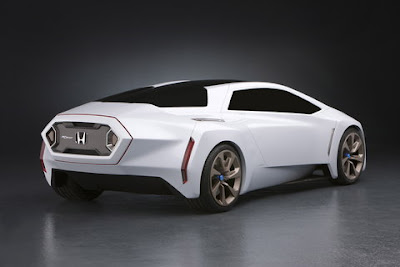
The hydrogen fuel-cell-powered Honda FC Sport design study model makes its Canadian public debut today at the 2009 Canadian International Auto Show in Toronto.

The oddly configured three-seat sports-car concept is designed to show the flexibility and potential of Honda's V Flow fuel-cell technology -- already deployed in the Honda FCX Clarity sedan.

"The Honda FC Sport explores new ways to satisfy automotive performance enthusiasts in a world beyond petroleum," said Jerry Chenkin, executive vice-president of Honda Canada.

"People who enjoy sports cars will not be forgotten by Honda in a hydrogen-powered future."
The high-output powertrain and a sleek, aerodynamic body contribute to the vehicle's performance potential. The majority of vehicle mass is distributed between the axles, creating the balanced weight distribution sought after in sports cars.

Source;
http://www2.canada.com/theprovince/news/driving/story.html?id=cf75dbc8-d52e-44b4-b423-050a5c7ee697

Honda FC Sport Concept Car to Make Canadian Debut

Hydrogen-powered Sports Car Concept Points to Future Direction

TORONTO, Feb. 2 /CNW/ - The Honda FC Sport design study model, ahydrogen-powered, three-seat sports car concept, will make its Canadian debuton February 11 to members of the press at the press preview of the 2009 Canadian International Auto Show in Toronto which opens to the public on Friday, February 13.

The FC Sport emphasizes the design flexibility and potential of Honda's VFlow fuel cell technology - already deployed in the Honda FCX Clarity sedan -and reconfigures it into a lightweight sports car design with an ultra-lowcenter of gravity, powerful electric motor performance and zero-emissions. Thedesign study concept is inspired by supercar levels of performance through lowweight and a high-performance, electrically driven fuel cell powertrain.

"The Honda FC Sport explores new ways to satisfy automotive performanceenthusiasts in a world beyond petroleum," said Jerry Chenkin, executive vicepresident of Honda Canada Inc. "People who enjoy sports cars will not beforgotten by Honda in a hydrogen-powered future." The high-output Honda fuel cell powertrain and a sleek, aerodynamic bodycontribute to the vehicle's performance potential. A modular approach to fuelcell component packaging and the electric drivetrain contribute to the FCSport's low center of gravity with the majority of vehicle mass distributedbetween the axles, creating the balanced weight distribution sought after insports cars.

The ideal placement of the Honda V-Flow fuel cell stack and relatedcomponents demonstrates the benefits of a platform-specific, hydrogen-poweredfuel cell powertrain. The FC Sport is configured to accommodate acustom-formed high-power fuel cell stack, located between the rear seats, anda battery pack placed low in the middle of the vehicle. The electric motorresides just forward of the rear axle. Two fuel storage tanks, visible fromabove, are located above the rear axle.

The optimal placement of fuel cell components for performance also allowsfor a relatively large passenger cabin by conventional supercar standards withenough space for three seating positions. The interior layout focusesprimarily on the driver with a racecar-like center driving position. Theenclosed canopy opens upward from the rear to allow for entry and exit. Tworear passenger seats flank the driver's left and right side.

The sleek, low-profile body is designed to convey a high-technologyappearance with sculpting that combines angular shapes in the front of thevehicle that taper into geometric, hex forms in the rear. The rear hex formshouse cooling radiators for the fuel cell. Formula 1-style barge boards behindthe front wheels enhance high speed aerodynamics and convey the vehicle'sracing pedigree. The hydrogen storage tanks, visible from the rear deck,showcase the FC Sports fuel cell technology in much the same way that a "nakedbike" motorcycle showcases its engineering technology.

The glacier white body color conveys the FC Sport's clean environmentalaspirations while the dark wheels and deeply tinted glass provide a symboliccontrast befitting of the vehicle's unique combination of clean power and highperformance. Green construction techniques further contribute to a reducedcarbon footprint. An organic, bio-structure theme is carried through to thebody construction where exterior panels are intended to use plant-derivedbio-plastics.

The Advanced Design Studio of Honda R&D Americas in Pasadena, California,developed the FC Sport design study vehicle with the primary objective ofusing existing fuel cell technology as the basis for an ultimate Honda sportscar. Designer Jason Wilbur led the design efforts.

Honda Canada manufactures the Honda Civic and Civic Si sedan and coupe,and the Acura CSX sedan and MDX luxury utility vehicle at its two plants inAlliston, Ontario, and produces fuel-efficient 4-cylinder engines at its newengine plant adjacent to its Canadian manufacturing facilities. With 135manufacturing facilities in 28 countries worldwide, Honda attracts more than24 million customers annually.

Source;
http://www.newswire.ca/en/releases/archive/February2009/02/c4808.html

Here is my original post on the subject;
http://thehondaportal.blogspot.com/2008/11/2008-la-auto-show-honda-fc-sport.html

Honda Clarity Burns Hydrogen, Emits Only Water: Jason H. Harper

Here's a good article from Bloomberg.com with some information on the Honda FCX Clartiy....
Nov. 26 (Bloomberg) -- It’s not every day that you get to kick the wheels on the car of tomorrow. After all, the question of what will power future automobiles is a guessing game, with candidates ranging from electricity and compressed natural gas to hydrogen fuel cells.

Honda made an expensive bet in that guessing game by designing the hydrogen-powered FCX Clarity. It’s costly (perhaps $500,000 each to produce), yet the sedan emits only water.

Both Honda and Chevy are testing fuel-cell vehicles by making them available for lease by select customers. Hydrogen’s big upside is its cleanliness and ability to be produced from many sources, even water and human waste.

Fuel-cell stacks are akin to mini power stations in which the chemical energy of hydrogen and oxygen is converted into electricity, which then powers an electric motor. Since hydrogen is a gas, it’s stored under pressure in reinforced tanks.

There are big hurdles to clear because the technology is expensive and an entire hydrogen refueling infrastructure will need to be created. (Honda’s previous FCX, first delivered in 2002, cost about $1 million each to produce. Executives are coy but say the Clarity costs about half that.)

I pick up the Clarity in Manhattan with the intent of driving it dry, as I’m curious about the refueling process itself. Is it complicated?

I turn the key, push the start button and the center gauges soon turn blue, indicating it’s ready to drive. Like a hybrid or electric car, there’s no start-up noise.

I motor into traffic, trying not to ignore the fact that while the Clarity is as exotic and expensive as an Italian supercar, nobody else -- including errant yellow taxis -- knows this. Best to avoid fender benders.

Refueling Station

I’m on my way to Allentown, Pennsylvania, about 90 miles away. There I will find Air Products & Chemicals Inc. and its hydrogen refilling station. The Clarity has a range of 190 miles of highway driving, 280 of combined city/freeway. (Like hybrids, fuel-cell vehicles get better mileage in town, at slow speeds with less wind resistance.) A full tank is just enough for one back-and-forth trip.

In the Clarity’s case, hydrogen is delivered as pressurized gas, and one kilogram is roughly equivalent to one gallon of gas. Over 200 miles in the day, I average 55 miles per “gallon.” Yet the tank only holds about four kilograms of hydrogen, and if you run out, a flatbed truck is in your immediate future.

Only in California

The Clarity has its own production line, which over the next three years will put out some 200 cars. Only Southern California customers are currently getting them since the state has the most hydrogen stations. Customers are pre-vetted, and leases cost $600 a month for three years, including maintenance and insurance. (So far, only a few have been delivered.) Honda is obviously not making money on the project, but it does suggest a certain seriousness.

New York won’t see the Clarity soon. General Motors Corp., though, is offering its fuel-cell Chevy Equinox SUV at no cost to some 100 drivers in New York, Southern California and Washington, D.C. New York drivers can use a Shell station in White Plains.

The Clarity was expressly designed as a fuel-cell vehicle, and the result is an elegant and handsome four-door sedan. With no big engine in the front, the hood and overhang are quite short and offset by a raked windshield. The Clarity is basically one long swoop, with a high back trunk to minimize air drag. Futuristic, though not aggressively so.

Easy Handling

I’m surprised to find that it drives just about like any other Honda. It’s easy to negotiate in traffic, handles nicely and doesn’t feel especially sluggish. Nor did I have any problem keeping up with fast traffic on the highway.

It looks like a real car, too. The test version has a metallic burgundy paint job, attractive wheel rims and an interior that would make an Acura proud, with GPS navigation, cooled and heated seats and tons of room.

Electronic gauges monitor gas mileage, hydrogen levels and range, and how much power is recaptured while braking (a technology shared with hybrids). A small circle at the center expands and contracts depending on how much power is being used -- an intuitive way of gauging how efficiently you’re driving.

My range is dwindling as I near Allentown, and I’m glad to find Air Products, which has some 85 hydrogen stations in 15 countries. They’re expecting me, and representatives explain the simple refueling process.

I insert a narrow hose onto a nozzle inside the car’s gas latch and then turn a locking lever. It’s a “closed system,” so the hydrogen neither leaks nor releases fumes. The pump performs a check of the pressure inside the car’s hydrogen chamber, then begins fueling.

Minutes later, I’m back on the road to New York.

No doubt hydrogen technology has a long way to go to become practical, yet if the Clarity is any indication, the actual process of driving and refueling could be a painless one.

The Honda FCX Clarity at a Glance

Engine: Fuel-cell stack and electric drive motor, with 134 horsepower and 189 pound-feet of torque.

Transmission: One-speed direct drive.

Speed: 0 to 60 miles per hour in about 10 seconds.

Gas mileage per kilogram: 77 city; 67 highway.

Best features: Emits only water but drives like a gas-fueled car.

Worst feature: The fear of running out of hydrogen and being stranded.

Target buyer: The true environmental front runner (who also lives in Southern California).

Source;
http://www.bloomberg.com/apps/news?pid=20601093&sid=atizckxemqGw&refer=home#

More Honda FC Sport Pic's

Here is my orig. post on the subject with more pic's and information;
http://thehondaportal.blogspot.com/2008/11/2008-la-auto-show-honda-fc-sport.html

2008 LA Auto Show; Honda FC Sport Hydrogen Car

Honda FC Sport Design Study Suggests Hydrogen Sports Car Future
Innovative fuel cell packaging demonstrates green performance potential

11/19/2008 - LOS ANGELES -
Honda today revealed the Honda FC Sport design study model, a hydrogen-powered, three-seat sports car concept, at the 2008 Los Angeles Auto Show.

The FC Sport emphasizes the design flexibility and potential of Honda's V Flow fuel cell technology - already deployed in the Honda FCX Clarity sedan - and reconfigures it into a lightweight sports car design with an ultra-low center of gravity, powerful electric motor performance and zero-emissions. The design study concept is inspired by supercar levels of performance through low weight and a high-performance, electrically driven fuel cell powertrain.

"The Honda FC Sport explores how to satisfy automotive performance enthusiasts in a world beyond petroleum," said Dan Bonawitz, vice president of American Honda Motor Co., Inc. "People who love sports cars will still have a reason to love in a hydrogen-powered future."

The high-output Honda fuel cell powertrain and a sleek, aerodynamic body contribute to the vehicle's performance potential. A modular approach to fuel cell component packaging and the electric drivetrain contribute to the FC Sport's low center of gravity with the majority of vehicle mass distributed between the axles, creating the balanced weight distribution sought after in sports cars.

The ideal placement of the Honda V-Flow fuel cell stack and related components demonstrates the benefits of a platform-specific, hydrogen-powered fuel cell powertrain. The FC Sport is configured to accommodate a custom-formed high-power fuel cell stack, located between the rear seats, and a battery pack placed low in the middle of the vehicle. The electric motor resides just forward of the rear axle. Two fuel storage tanks, visible from above, are located above the rear axle.

The optimal placement of fuel cell components for performance also allows for a relatively large passenger cabin by conventional supercar standards with enough space for three seating positions. The interior layout focuses primarily on the driver with a racecar-like center driving position. The enclosed canopy opens upward from the rear to allow for entry and exit. Two rear passenger seats flank the driver's left and right side.

The sleek, low-profile body is designed to convey a high-technology appearance with sculpting that combines angular shapes in the front of the vehicle that taper into geometric, hex forms in the rear. The rear hex forms house cooling radiators for the fuel cell. Formula 1-style barge boards behind the front wheels enhance high speed aerodynamics and convey the vehicle's racing pedigree. The hydrogen storage tanks, visible from the rear deck, showcase the FC Sports fuel cell technology in much the same way that a "naked bike" motorcycle showcases its engineering technology.

The glacier white body color conveys the FC Sport's clean environmental aspirations while the dark wheels and deeply tinted glass provide a symbolic contrast befitting of the vehicle's unique combination of clean power and high performance. Green construction techniques further contribute to a reduced carbon footprint. An organic, bio-structure theme is carried through to the body construction where exterior panels are intended to use plant-derived bio-plastics.

The Advanced Design Studio of Honda R&D Americas, in Pasadena, California, developed the FC Sport design study with the primary objective of using existing fuel cell technology as the basis for an ultimate Honda sports car. Designer Jason Wilbur led the design efforts.

Honda R&D Americas, Inc. began its operations in California in 1975 with local market research activities and has steadily grown its capabilities over the past 33 years to include all aspects of new vehicle design and development. Recent development efforts include trend-setting products such as the Honda Pilot, Ridgeline, Element, Civic Coupe and Civic Si.

In 2008, the company opened two new design centers in Southern California: the Acura Design Studio (Torrance), for the research and design of new Acura products; and the Advanced Design Studio (Pasadena), for the exploration and development of advanced design themes for both Honda and Acura.

The company operates 11 major R&D facilities in North America, including a full vehicle development center in Raymond, Ohio, and three design studios in Southern California. Honda R&D designers, engineers and support personnel are engaged in the development of Honda and Acura automobiles, powersports products, and power equipment for North America and global markets. The company's main centers of operation include the Los Angeles Center (Torrance, California), responsible for market research, concept development and styling design; the Ohio Center (Raymond, Ohio), responsible for complete product development, testing, and support of North American supplier and manufacturing operations; and a dynamic test facility in Cantil, California.

Source;
http://www.hondanews.com/categories/1097/releases/4879

Good Info on the Hydrogen FCX at H2O Daily

Honda brings the best hope for the future by introducing the World's First Hydrogen powered Fuel Cell car, the FCX Clarity. Honda says that it plans to produce a total of about 200 Clarity models during the next three years. It projects that it will cost close to $1 million to manufacture each car.

Built on the all-new Honda V-Flow fuel cell platform and powered by a highly compact, powerful, and efficient new Honda V Flow fuel cell stack, the FCX Clarity marks the significant progress Honda continues to make in advancing the real-world performance and appeal of the hydrogen fuel cell car.

This hydrogen fuel cell-powered vehicle is propelled by an electric motor that runs on electricity generated in the fuel cell. The vehicle's only emission is water, and its fuel efficiency is three times that of a modern gasoline-powered vehicle. The electric motor generates 127 horsepower and it can produce more electricity than needed to power all the gadgetry found in the vehicle.

This new hydrogen car has significant improvements over Honda's previous generation FCX. The powertrain on this next-generation FCX Clarity are listed here:

• Is over 397 pounds lighter
• Has 120% better power-to-weight ratio
• Is 20% more fuel efficient
• Has a powertrain that is 45% more compact and 10% more energy-efficient

This new model has a lower floor and sleeker overall design, integrating the more compact stack with a smaller powertrain. Its thin A-pillars allow better visibility. A flat-bottom underbody reduces aerodynamic drag and increases efficiency.

The FCX Clarity offers the amenities of a luxury sedan including limousine-like cabin volume, a new lighter lithium ion battery pack, electric steering, a climate control system within the seats to minimize energy use, Honda bio-fabric upholstery, rear camera, floating/layered instrument panel, XM satellite radio, thermo-electrically heated and cooled seats, electronic stability control, adaptive cruise control and a navigation system.

Source;
http://www.h2daily.com/index.php/20080921714/Latest/Hydrogen-powered-Fuel-Cell-Car-Introduced-by-Honda.html