Showing posts with label Ford. Show all posts

Feds investigate Ford Escape and Mazda Tribute SUVS for complaints about sticky throttles

By Dee-Ann Durbin,Tom Krisher, The Associated Press  
DETROIT - Government safety regulators are investigating complaints that throttles can stick on older-model Ford Escape and Mazda Tribute SUVs and cause them to crash.

The probe, announced Tuesday by the National Highway Traffic Safety Administration, affects 730,000 SUVs from the 2001 to 2004 model years that are powered by V-6 engines.

The safety agency said it has received 99 complaints from owners of the SUVs alleging 13 crashes, nine injuries and one death caused by the problem. The throttles on the SUVs can fail to return to idle when the driver takes his foot off the gas pedal, according to agency documents.

Sixty-eight of the complaints were about the Escape, and 31 involved the Tribute, a nearly identical vehicle made by Ford for Mazda. Dearborn, Mich-based Ford used to own about one-third of Mazda. But Ford began cutting ties in 2008, and in 2010 lowered its ownership to 3.5 per cent.

Investigators are looking into whether the sticky throttles could have been caused by repairs made as part of a 2004 recall of the same vehicles. About 590,000 of the vehicles were recalled in December of 2004 to fix an accelerator cable defect, and the documents say the repairs could have damaged the cruise control cable.

The investigation is among the larger probes started by NHTSA in 2012. While many affect fewer than 100,000 vehicles, the agency this year began looking into door fires affecting 1.4 million Toyota Camry midsize sedans and RAV4 small SUVs. It also expanded a fuel tank fire probe in older-model Jeep Grand Cherokee SUVs to include 5.1 million vehicles.

NHTSA investigations are the first step toward a recall, but they don't always cause cars and trucks to go back to dealerships for repairs.

The SUV investigation comes just over a week after the Center for Auto Safety, a Washington, D.C., advocacy group petitioned NHTSA to investigate the Escape and Tribute problems. The group also wants a hearing on whether Ford and Mazda met obligations to notify owners and fix defects in their vehicles.

But NHTSA said in documents filed Tuesday that it has denied the group's petition because the agency has been looking at the Escape and Tribute problems since early in 2012. The agency said it began gathering information after the driver of a 2002 Escape was killed in a crash in Payson, Ariz., this past January.
 Source;http://www.canadianbusiness.com/article/91396--feds-investigate-ford-escape-and-mazda-tribute-suvs-for-complaints-about-sticky-throttles

Ford’s last appointee Thomas Pixton leaves Mazda board

Ford Motor Co. is now officially unrepresented in the board of Mazda Motor Corp. This came as the last Ford appointee on Mazda's board, Thomas Pixton, left the Japanese carmaker following its June 27 annual shareholders' meeting. Pixton’s exit from Mazda signals the end of an era that is marked by Ford’s control of the Japanese carmaker’s board. Ford first acquired a 25 percent stake in Mazda in 1979, when the latter was struggling financially. Mazda’s financial troubles once again paved the way for Ford to acquire additional stakes and increase its ownership to 33.4 percent in 1996.

However, fiscal winds changed directions and headed to Ford in 2008, forcing the carmaker to slowly divest its stake in Mazda to boost its emptying coffers. In a span of two years, Ford saw its stake in Mazda dwindle to 3.5 percent. In 2012, Ford sold another tranche of shares to effectively reduce its stake in Mazda to 2.1 percent. During Ford’s dominance in Mazda, the US carmaker was able to enthrone four of its executives as successive presidents of its Japanese partner. However, Ford’s control of Mazda as well as the number of board representatives dwindled as its stake decreased.

Despite the end of its involvement in Mazda, Ford remains as a partner in other ventures. Ford and Mazda still jointly own the AutoAlliance International Inc assembly plant in Flat Rock, Mich.; Mazda, however, decided in June to indefinitely suspend output of its vehicles at the plant. Both carmakers are also involved in a three-way joint venture in China with Chongqing Changan Automobile Co.; but they are assessing ways to break the venture up so that Ford and Mazda can have separate operations in China. Ford and Mazda also jointly own the AutoAlliance (Thailand) Co., assembly plant. The good news is that, the carmakers said in April 2012 that they will invest around $27 million to increase the plant's annual pickup capacity by 20,000 units to 195,000 units.

Source;
http://www.4wheelsnews.com/fords-last-appointee-thomas-pixton-leaves-mazdas-board/

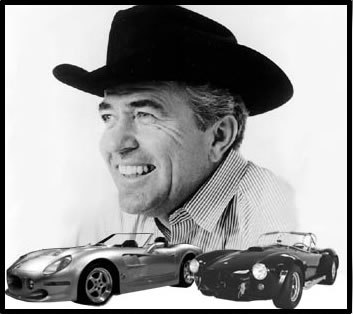
Carroll Shelby, father of Cobra sports car, dies at 89

By Deepa Seetharaman
DETROIT (Reuters) - Carroll Shelby, designer of the Shelby Cobra and other sports cars that placed him in the pantheon of auto industry legends, has died at age 89, his company said on Friday. He died on Thursday at Baylor Hospital in Dallas, according to the company, Carroll Shelby Licensing. The firm did not disclose the cause of death. A post on his Facebook page last month revealed he had been hospitalized for pneumonia.

Shelby was one of the few prominent designers to work with all three major American car companies, starting with Ford Motor Co in the 1960s. His last collaboration with Ford was on the 2013 Ford Shelby GT500. 'My name is Carroll Shelby and performance is my business,' he said in an early Cobra commercial. Shelby was born in Leesburg, Texas, in 1923. He started racing cars in the 1950s, and in 1959 he won the 24 Hours of Le Mans, a marathon race held in France. But he was diagnosed with a serious heart condition that forced him to quit racing. In 1960 he drove one race with nitroglycerin pills under his tongue. He complained that he would have won if not for the pills. Shelby had a heart transplant in 1990 and a kidney transplant in 1996.

In 1962 Shelby test-drove the AC 260 roadster, the car made with a Ford engine that would become the Shelby Cobra. His company built the first Cobras in Venice, California. Two years later, Ford asked Shelby to develop a high-performance Mustang. 'Whether helping Ford dominate the 1960s racing scene or building some of the most famous Mustangs, his enthusiasm and passion for great automobiles over six decades has truly inspired everyone who worked with him,' said Edsel Ford II, grandson of the No. 2 U.S. automakers founder Henry Ford. His contract with Ford ended in 1970, and he then worked with Chrysler and General Motors Co. In 2001 Shelby was working with Ford again.

Shelby is survived by three children and his wife, Cleo.

(Reporting By Deepa Seetharaman; Editing by Xavier Briand)

Source;
http://ibnlive.in.com/generalnewsfeed/news/carroll-shelby-father-of-cobra-sports-car-dies-at-89/997719.html

Ford Demands Ultimate Sacrifice From Japan: Kill Some Car Factories, Then We Talk

Steve Biegun of FORD
By Bertel Schmitt
Imagine what happened if the representative of a large Japanese or Chinese car company would demand that America should close some car factories before easier access to foreign markets would be contemplated. All hell would break loose, and the Seventh Fleet would steam in the direction of the loose cannon – if it is not already there. What happens if the representative of Ford says that Japan should be required to reduce the size of its auto industry before being allowed into regional free trade talks with the United States and eight other countries in the Asia Pacific? Business as usual.


Steve Biegun, Ford’s vice president for international government affairs, showed symptoms of severe disorientation when he gave an interview to Reuters. Not only did the former foreign policy adviser to Sarah Palin require that Japan shutters some car plants before the country is admitted into the proposed Trans-Pacific Partnership (TPP) pact. Biegun also claims that Japan is “the most protected automotive market in the developed world.”

This is a perplexing claim. The U.S. has one of the lowest tariffs on auto imports, 2.5 percent. It is outdone by Japan, which has the world’s lowest tariff: Zero.
Says Reuters:
 “But Ford contends the Japanese government maintains a number of regulatory and other “non-tariff barriers” to keep out most foreign cars and also intervenes heavily in currency markets to help its auto companies export cars.”
William Duncan, director of the Japanese Automobile Manufacturers Association’s office in Washington, says Biegun’s arguments are “rather bizarre,” and I agree.

Biegun’s claim that Japan manipulates its currency must be based on hallucinations, or drugs that trigger same. A look at a chart shows that the Japanese Yen is close to its all-time-high against the dollar, a fact that shunts Japanese exports more effectively than any trade policy. Claims that Japan manipulates its currency usually trigger a psychiatric evaluation, but don’t seem to be out of character for a Sarah Palin advisor.

Biegun repeats the old “non-tariff-barrier” talking points, but cannot name specifics. On that, Biegun and his colleagues are sitting in the glass house.  The U.S. market is surrounded by one of the highest non-tariff barriers in the world, the Federal Motor Vehicle Safety Standards, which are largely incompatible with the rest of the world that is more or less aligned behind UNECE standards or is derivatives.

A large part of the American cars that come into Japan don’t even have to adhere to Japan’s standard type approval. They are coming in under the Preferential Handling Procedure (PHP), a certification option for low-volume imported vehicles of less than 2,000 vehicles per vehicle type.  Under this procedure, cars can be brought into Japan with minimum paperwork, not even a test vehicle is required. Successful importers to Japan, such as Volkswagen, BMW or Daimler, have to contend with much more red tape than the Detroit whiners.

The Preferential Handling Procedure was,  says the Japanese manufacturer association JAMA, established in “1986 at the request of the United States Government to ease the burden on importers.”  The U.S. did not reciprocate and provides no such loophole for small volume imports.

Most of all, half of America’s automobile market, and the most profitable half, is surrounded by a tariff barrier as formidable  as the Chinese Wall: Since the early 60s, there is a 25 percent tariff on light trucks imported to the U.S., which pretty much stopped imports of light trucks to the U.S.

One continues to wonder what makes Ford and its Detroit friends resort to lies and distortions. More than 70 percent of all Japanese cars sold in the U.S. are already made there. With the yen being obscenely high (Sarah Palin won’t know, she rarely travels), exports from Japan get smaller by the day.

The moaning about being shut out of the Japanese market is ridiculous. American cars are largely unsalable in Japan. They are doing worse in Europe. GM exported a total of 109 cars from the US to Europe in the first three months of 2012, says ACEA. In the same period, GM exported 819 cars to Japan, says the Japan Automobile Importers Association.

Observers are scratching their heads when the U.S. car industry is going into hysterics about Japan and the TPP. Japan’s high yen is a much more formidable barrier to entry than  America’s 2.5 percent duty. Two possibilities:  Detroit wants to maintain the chicken tax. A silly exercise, given that even made-in-the-U.S.A. Japanese trucks are not taking the world by storm. Or, more plausible, the U.S. wants to keep Japan at a disadvantage when it comes to the emerging markets that are part of the TPP.

Source (via www.autoblog.com);
http://www.thetruthaboutcars.com/2012/05/ford-demands-ultimate-sacrifice-from-japan-kill-some-car-factories-then-we-talk/

Ford worked with Japanese automakers during recession to buoy suppliers, book says

Now this is interesting....


By Jaclyn Trop
The Detroit News

Ford Motor Co. worked with two Japanese automakers to keep their suppliers afloat during the recession, according to a book by Detroit News automotive reporter Bryce G. Hoffman that will be released March 13.

The secret alliance was part of a broader effort by Ford to shore up its supply base after the financial crisis of 2008 pushed many parts manufacturers to the brink of bankruptcy.

According to "American Icon: Alan Mulally and the Fight to Save Ford Motor Company" (Crown Business), Ford gathered an internal team during the financial collapse toward the end of 2008 to study its supplier base. Known as Project Quark, the study assessed which suppliers could be at risk of collapse if Ford's competitors went bankrupt or discontinued a vehicle model.

Ford monitored the situation of each of its critical suppliers in real time and took steps to support those that it deemed critical to its own operations. Ford also worked with Toyota Motor Corp. and Honda Motor Co. to support their supplier base by buying from each others' suppliers, according to Hoffman.

General Motor Corp. declined to participate over concerns of the arrangement's legality and their own restructuring efforts, Hoffman reported.

Ford's own antitrust attorneys "carefully vetted" each trade among Ford, Toyota and Honda to support their suppliers, according to the book.

Chrysler, which was then headed toward bankruptcy, did not participate.

With Ford Motor Co.'s cooperation, "American Icon" tells the behind-the-scenes account of the automaker's turnaround.

Project Quark is still alive "in the sense that we maintain a robust database of our supplier to see how they would be affected by a change in the industry," said Ford spokesman Todd Nissen.
"American Icon" will be excerpted in The Detroit News beginning March 12.

Source;
http://www.detroitnews.com/article/20120302/AUTO0102/203020408/1148/rss25

Chevy Silverado "2012" | Super Bowl XLVI Ads | Chevrolet Commercial

Ha! Hilarious! I see that Ford is up in arms over the claims in this ad, take it easy, it's meant to be funny. Wow.

Ford sent a letter to NBC requesting the ad not run in the game. It also sent a letter to Chevy asking the automaker to pull the ad from the game, its websites and its Youtube channel. "Ford demands that Chevrolet immediately cease and desist from making any unsubstantiated and disparaging claims regarding Ford's pickup trucks." The letter warned Ford could take further actions. "If Chevrolet does not comply with the above terms prior to the start of the Super Bowl, then Ford will take all appropriate steps to enforce and protect its reputation."

2012 Detroit Auto Show: 2013 Ford Fusion

I gotta say, I love the Maserati front end, and if their claims are 'real world' worthy....
In a press conference that clearly targeted the Honda Accord and Toyota Camry, Ford said consumers “expect more” than what its Japanese rivals have been offering and have, in response, developed the all new 2013 Fusion sedan. The car was unveiled today at the North American International Auto Show in Detroit.

With a fresh new design, an impressive interior and plenty of technology, the Fusions big boast is its fuel economy, which global product development boss Derrick Kuzak calls “game changing.” Hardly an empty remark, the Fusion will get 26 mpg city and 37 mpg highway with a new EcoBoost 1.6-liter turbocharged 4-cylinder engine. (Both an entry level 170-hp 2.5-liter 4-cylinder and a 237-hp EcoBoost 2.0-liter will be offered as well).

Taking a step up in fuel economy is the new hybrid model, which bests even the new Camry Hybrid by a significant margin with 44 mpg city and 47 mpg highway. Ford even showed off what it calls the Fusion Energi, a plug-in hybrid, with an incredible 100 mpge rating – 8 more than even the Volt.

Source;
http://www.autoguide.com/auto-news/2012/01/2013-ford-fusion-revealed-with-game-changing-fuel-economy-2012-detroit-auto-show.html

Ford Ecosport Revealed for New Delhi

Looks like this is one for India only. Not sure what to think about this one....

Ford has released the new EcoSport prior to its public unveiling at the New Delhi Auto Expo tomorrow. Initially targeted to emerging markets, the EcoSport will eventually launch globally.

The Ford EcoSport looks substantial despite its compact dimensions. It features high ground clearance and integrated lower body cladding for that rugged look. The EcoSport is defined as being targeted to consumers who want a sporty and casual car that stands out, but in an intelligent and sustainable way.

The compact SUV features a turbocharged 1.0-liter Ecoboost engine with 120 PS (118 hp / 88 kW) and 170 Nm (125 lb-ft) available from 1,300-4,500 rpm. The direct injection engine is mated to a five-speed manual transmission. Ultimately, 1.0-liter Ecoboost engine will be made available in Ford models in China, Europe, North America and other regions.

The new EcoSport was developed in Ford's Development Center in Camaçari, Brazil. Previously, the EcoSport name was used on a crossover SUV version of the European derived Ford Fusion MPV in Latin America since 2003 and served as the first affordable SUV in the region. It went on to sell 700,000 vehicles in nine years.

This new Fiesta based B-platform SUV, which is the second of ten new models to be spawned from this platform by mid-decade, will eventually be sold in 100 markets worldwide. Ford projects the new B-platform family of vehicles will represent more than 2 million units of annual production as compact cars continue to drive global growth.

The EcoSport will be produced at plants in Brazil, India, and other markets to be announced at a later time.

Source;
http://www.worldcarfans.com/112010439431/ford-ecosport-compact-suv-revealed---debut-in-new-delhi

Ford F150 Badly Damaged Driving Off Debris On 3 Wheels.

Wow....


Source;
http://jalopnik.com/5845835/watch-a-heavily-damaged-ford-truck-remove-itself-from-hurricane-wreckage

Car and Driver: Ford Evos Concept - Auto Shows

Wow....

Good genes: Ford’s Frankfurt debutant defines a new design language for its global products.

BY STEVE SILER


At the 2005 Frankfurt auto show, Ford’s stunning Iosis concept car debuted the company’s “Kinetic” design language, which shortly thereafter debuted on non-U.S. models like the Mondeo, European Focus, C-Max, and Kuga. Our first taste of Kinetic design came more recently with the 2011 Fiesta and 2012 Focus models. But now Ford’s look is evolving, with another Frankfurt concept—the 2011 show’s gorgeous and aptly named Evos—previewing the next evolution (get it?) of Blue Oval design.


Sadly, the company won’t go so far as to adapt the Evos’s quad butterfly doors for production. But this fastback four-seater, which is shorter than a Focus sedan but wider than a Porsche Panamera, does embody a half dozen newly defined pillars of Ford global design—which will drop the Kinetic moniker. The Evos will provide the template for future Fords, and so we took a virtual tour of the car with Ford design chief J Mays, who explained those design pillars.


Ford’s New Global Design Language, Explained

The first two pillars of Ford’s new design language are “silhouette innovation” and “perceived efficiency.” The former, according to Mays, represents a profile “that defines your automobile and looks different than most of the other cars in a particular class on the road,” while the latter equates to visual lightness and sleekness. “We’d like to have lightweight pillars [and] a teardrop cabin [where] the lines on the side disappear at a vanishing point somewhere around 100 yards behind the car.” The gist? Think less ‘traditional three-box sedan’ and more ‘four-door coupe.’


“Refined surface language” refers to a smoothing out of Kinetically sculpted body surfaces, among them the architectural fenders, creased door skins, and sculpted hoods. This directive also appears to be a reaction to other manufacturers that Mays claims have “annexed” and subsequently exaggerated Ford’s Kinetic motifs. Ford is going in “exactly the opposite direction” now, he said, keeping what he called the “excitement” of Kinetic design but rendered in “beautiful shapes you’d love to run your hands over.”


An emphasis on the fourth pillar, “technical graphics,” basically refers to the lamps and lower body addenda. “Headlamps seem to be growing to absurd proportions,” said Mays. “They’ve become less about technology and more about design flourish and style. And we think that’s reached its complete evolution. So we’re going to the minimal height for the headlamps and the taillamps and we’re going to let the technology speak for the graphics rather than overt style.” The headlamps on the Evos are rendered in LEDs “designed in such a way that you probably haven’t seen before.” Will every future Ford model get “razor-cut” headlamps such as these? Yes, and Mays told us that he is committed to LED headlamps on every new Ford, although we’ll have to see if those make it past the accountants.


The final two newly defined design-isms are the “new face of Ford,” which involves pulling the trapezoid grille way up to the leading edge of the hood (it gives the Evos a sort of Mustang-esque shark nose), and a “visual sense of premium quality,” which—besides being less catchy than the others—basically means creating the sort of designs people associate with higher-end cars. “We’ve tried to eliminate one of the grilles on the vehicle, and focus on the other. And what that does is allow us to have a smaller inlet, gives us better aerodynamics, and also, I think, looks much more premium.”


If roadgoing Fords end up looking like the Evos, we say “mission accomplished” to the premium bit. Indeed, more than a few of us think that the “new face of Ford” looks a lot like the current face of Aston Martin, particularly, the slim, six-sided grille and Rapide-esque roofline. Could Ford be suffering from a case of “seller’s remorse” after getting rid of Aston Martin during the great fire sale of 2008? Mays didn’t admit any such—to borrow his own term—annexation of Aston’s designs, but when asked about the similarities, he seemed rather comfortable with the comparison.


Head in the “Cloud”

However Aston-y the Evos looks, it wouldn’t be a show car if it didn’t contain a boatload of future tech. Cloud-based connectivity supposedly helps the Evos identify and pre-arrange its various systems to match the preferences of the upcoming drive, thus promising “seamless connectivity” from home to car to office, which may or may not be a good thing. It also gauges the skills of the driver and, reconciling them with weather and road conditions, adjusts the powertrain and chassis to maintain “optimum safety”—which sounds a bit Hal 9000 to us. Then there are the “driver wellness” features, too, which include a heart-rate monitor; the car is able to use current and previous data via the cloud to monitor “the physical state and workload of the driver and adjusts the driving experience accordingly.” To the good, if you start driving aggressively, the Evos will also simplify the gauge cluster to provide only necessary info and switch the driver’s phone to “do not disturb mode.”


The Evos is powered by—what else?—the cloud. Just kidding. It features a lithium-ion-based, plug-in gas/electric powertrain that’s said to be able to deliver extended-range or parallel-hybrid propulsion, ultimately delivering the same sort of fuel economy as the Ford C-Max Energi that’s scheduled to arrive stateside next year. Ford gave no more details on the powertrain beyond this: The cloud would theoretically be heavily involved, directing the car when to make various on-the-fly powertrain adjustments, such as switching to electric mode when driving into a city center that may have emissions restrictions.


We won’t have to wait long to see the look previewed here on a saleable Ford product. The 2013 Fusion will be the first Ford to wear the new design language; we expect to see that car next January at the Detroit show. In the meantime, if you can make it to Frankfurt, check out the Evos—it’s a stunner.


Source;

http://www.caranddriver.com/news/car/11q3/ford_evos_concept-auto_shows

2012 Ford Ranger Wildtrak : Latest Cars Reviews

2012 Ford Ranger Wildtrak : Latest Cars Reviews

2012 Ford Ranger Wildtrak : Latest Cars Reviews

2012 Ford Ranger Wildtrak : Latest Cars Reviews

2012 Ford Ranger Wildtrak : Latest Cars Reviews

2012 Ford Ranger Wildtrak : Latest Cars Reviews

2012 Ford Ranger Wildtrak : Latest Cars Reviews
The all-new Ford Ranger Wildtrak makes its global debut at the 2011 Geneva Motor Show, a sporty compact pick-up that delivers impressive power and safety, excellent fuel efficiency and significant capability. It exudes a powerful presence bolstered by the latest in-car comfort and technologies.

Aiming to deliver class-leading safety, new 2012 Ford Ranger Wildtrak Photos Ranger utilizes a whole suite of technologies, including Electronic Stability Program (ESP), to keep its wheels sturdily planted on the road under all conditions. Despite being an enormously capable vehicle, the Ranger is also fitted with technologies such as satellite navigation and Bluetooth® voice control, more commonly found on premium or luxury cars.

Building on Ranger's long-standing heritage of capability, the all-new model extends Ford's credibility further, with selected European versions achieving a best-in-class towing capacity of 3350 kg. New from the ground up - with everything changed except its name - new Ranger is the first commercial vehicle to be built under the One Ford strategy as part of a global product program, bringing together the full engineering expertise of Ford around the world.

Designed and developed in Australia, Ranger will be offered as a complete family of compact pick-ups with three different cab body styles, 4x2 and 4x4 drive trains, two ride heights and up to four series choices to suit every pocket and market. It will be produced in Thailand, South Africa and Argentina for more than 180 markets worldwide.

The aggressive and sporty stance of the new Ranger line-up is enhanced for the range-topper, Wildtrak. There is a unique color split on the front and designers masked out the feature line on the fascia and contrasted it by highlighting the lower intake. The same accent colors were used on the side mirrors, door handles and side air vents to give the vehicle a dark sporty look.

"Wildtrak's aggressive look and bold new graphics are a perfect fit for those who appreciate a sporty and more expressive image. It will look fantastic transporting the latest quad bike or jet ski for their weekend getaways," said Craig Metros, chief designer of the all-new Ranger.

Sitting high on 18-inch alloy wheels, the Wildtrak also comes with a roof rack and a sports hoop which enhance its profile. Exclusive Wildtrak badging and graphics help to set it apart from other lifestyle vehicles.

Car-like levels of comfort and features

The purposeful interior of the Wildtrak echoes the dark sporty look of the outside. A special hydrographic finish on the center console around the audio is reminiscent of strong but lightweight materials like carbon fiber.

The seat trim - a combination of leather and woven cloth inspired by sportswear with ventilated sections - provides lateral support and confidence even on rough terrain. Contrast stitching and a discreet strip on the seat upper and bolster, all in distinctive Wildtrak Orange, accentuate the premium feel of the interior.

The cabin of Ranger has been stretched to provide segment-leading spaciousness and comfort. Three passengers can easily fit in the second row of the Wildtrak, for instance. It offers ample knee room and better foot clearance between the B-pillar and the seat. This means that getting in and out of the new Ranger is easier than ever for rear-seat passengers.

With 23 storage spaces in the cabin, Ranger offers more practical stowage than any competitor. A deep center console bin will keep up to six cans of beverage cool, while the glove box is large enough to accommodate a 16-inch laptop computer. Ample storage for mobile phones and other small items can be found in the console.

Also poised to be a leader in innovation, 2012 Ford Ranger Wildtrak comes with Bluetooth audio streaming, USB and iPod connectivity. There is voice control over the radio, CD, iPod, USB, air-conditioning and phone. It also offers a five-inch color screen with satellite navigation.

More power, more torque

There is a choice of two state-of-the-art common-rail Ford Duratorq TDCi diesels and new fuel-efficient six-speed transmissions that serve up more power and torque.

The new, Dagenham-built, 2.2-litre four-cylinder diesel delivers peak torque output of 375 Nm and power output of 150 PS, whilst a highly responsive and efficient new 3.2-litre 5-cylinder diesel produces a powerful 470 Nm of torque is power rated at 200PS. Both new powertrains have been developed and refined to deliver excellent fuel economy that is among the best in class. Fitted with an 80-litre fuel tank, Ranger is also expected to have one of the longest ranges in its segment.

New Ranger also features smart Ford technologies such as Adaptive Automatic Mode, which adapts gear shifts according to driving style and Grade Control Logic, which automatically downshifts when driving downhill and the brake pedal is depressed. This feature prevents the transmission from changing to a higher gear.

The 2012 Ford Mustang Boss 302s : Latest Reviews


The 2012 Ford Mustang Boss 302s has a new model concept and there is a few different Ford Mustang. The limited production BOSS 302S will be the third competition car in Ford Motor Company’s history to be built at a Ford production facility and made available for racers to purchase through authorized Ford Racing dealers.
Ford Mustang Boss 302 Laguna Seca cars are powered by the same smooth, high-winding 440-hp 5.0-liter V8 as the standard Boss, since the engine was already tuned specifically for road racing. Instead, engineers turned their attention toward delivering power to the ground most efficiently, and getting the car around a track in the quickest possible time.
The 2012 Ford Mustang Boss 302s has the suspension and steering department, higher-rate coil springs are added with stiffer suspension bushings and a larger-diameter rear stabilizer bar. The result changes lower the Mustang Boss 302 by 11 mm at the front and 1 mm at the rear. Adjustable shocks and struts are come in standard equipment on all Boss Mustang.

Designer Ciprian Cooks up Ford Cobra 'Snakehead' Concept

Wow, what a sleek design! I love the 77' Stingray rear side profile homage....
A new Ford concept has been released courtesy of designer Andrus Ciprian, dubbed the Cobra Snakehead.

The concept draws inspriation from past and current Ford models, so it fits in with the brand’s existing line up. Yet Ciprian adds some strong lines and distinctive features that make this one outstanding car.

The exterior leaves a lasting impression. Its rear end draws parallels with the first GT40′s, and the body also boasts massive wheel arches and other bold styling elements. Ford’s latest Focus model has some influence that can be seen in the front end. On the inside of the concept, two seats are divided by an excessive center console so each person gets the feel of a cockpit of their own.

To power the Cobra Snakehead, the designer suggests that a front mounted V8 would be fitting.

We hope Ford will take this concept into consideration for future models. The exterior design elements can certainly lend themselves to mass appeal, where as the interior concept may only work for some enthusiasts.

Source;
http://www.egmcartech.com/2011/07/05/ford-cobra-snakehead-concept-by-ciprian-is-a-beautiful-dream/

Mazda to leave Flat Rock plant it shares with Ford

Detroit News staff and wires
Mazda Motor Corp. will pull out of its manufacturing venture with Ford Motor Co. and stop making cars in Michigan, a Japanese newspaper reported Friday.

Ford and Mazda both declined to comment on the report.

But Mazda has been studying whether to keep making autos at the Flat Rock plant, and senior executives have said they expect to make a decision this year.

Mazda and Ford operate the AutoAlliance International plant as a 50-50 partnership. But the plant was running at less than half of its capacity last year, as its 1,700 workers produced just 36,000 Mazda6 cars and 78,000 Ford Mustangs on a single shift.

Citing unidentified company sources, the Nikkei business daily said Mazda was considering selling its stake to Ford as part of a restructuring of its global production operations.

Mazda would ship cars to the United States from Japan and from Mexico starting around 2013, according to the Nikkei.

The Japanese automaker said in a statement Friday that it had "nothing to announce at this time.

"Today's news report … is not based on information released by Mazda. We do not comment on speculation."

Several analysts expect Mazda to announce a decision soon.

"Mazda has signaled for months that it may be ending its U.S. manufacturing presence at the Flat Rock assembly plant, and although the company still hasn't confirmed the action, it seems circumstances are pointing in that direction," said Bill Visnic, senior analyst at online research firm Edmunds.com.

"Sales in the United States for the redesigned Mazda6 built at Flat Rock are running at about one-third of expectations," he said.

This year, Mazda has sold 103,072 vehicles in America, up 5.7 percent. But sales of Mazda6 cars, battling in the cutthroat midsize sedan segment, are down 8.9 percent at 13,604.

Ford has maintained employment at Flat Rock by increasing output of its vehicles at the plant, the Nikkei said.

But the ties binding the companies have loosened. Ford, once Mazda's controlling shareholder with a 33.4 percent stake, has reduced its holding to 3.5 percent.

In the meantime, Mazda is struggling financially. In the fiscal year ended March 31, its losses widened to 60 billion yen, or $742 million, from 6.5 billion yen, or $76 million, in the previous year.

The Hiroshima-based automaker attributed the deterioration in its results to lackluster sales in Japan, the initial impact of the massive March 11 earthquake and tsunami, and the strength of the yen. Mazda exports around 80 percent of the vehicles it makes in Japan.

Source;
http://www.detnews.com/article/20110604/AUTO01/106040319/1148/AUTO01/Report--Mazda-to-leave-Flat-Rock-plant-it-shares-with-Ford

1965 Shelby Cobra 427 vs 2011 Ferrari 458 Italia in a $400,000 ¼ Mile Race Bet; Can You Guess Who Wins?


A no-nonsense, classic American muscle car from the 1960s going head to head with a high-tech, thoroughbred Italian supercar in the ultimate quarter mile race. What more could you ask to make this battle more interesting? Well, how about a $400,000 wager?

Hype....

Results....


Source;
http://carscoop.blogspot.com/2011/03/1965-shelby-cobra-427-vs-ferrari-458.html

Mazda May Exit From U.S. Factory Operated With Ford

By Makiko Kitamura and Yuki Hagiwara - Feb 18, 2011

Mazda Motor Corp. may pull out from a U.S. factory it operates jointly with Ford Motor Co. after production turned unprofitable, Chief Financial Officer Kiyoshi Ozaki said.

The company will announce plans for the factory in Flat Rock, Michigan, by middle of this year, Ozaki told reporters in Tokyo today. Mazda may also consider overhauling the plant or changing the models built there, he said without elaboration.

Mazda, Japan’s second-largest auto exporter, has been hurt by the yen’s sustained rise against the U.S. dollar in recent months. The Hiroshima-based company’s U.S. sales fell 9 percent in January, as increased incentives on Toyota Motor Corp.’s Corolla compact, and demand for Hyundai Motor Co.’s Elantra sapped demand for the Mazda3, Ozaki said.

A decision by Mazda to leave the plant shared with Ford since the 1980s “wouldn’t catch Ford off guard,” said Kim Hill, an economist with the Center for Automotive Research in Ann Arbor, Michigan.

“Unlike several other Ford facilities, Flat Rock hasn’t had a major recent investment in flexibility,” Hill said. “If Mazda were to leave, Ford would probably want to look at putting something off its small-car platform in that facility.”

Marcey Evans, a Ford spokeswoman, declined to comment.

The Michigan plant needs to run at 70 percent of its full 240,000 annual capacity to make a profit, Ozaki said earlier today. Mazda aims to introduce a more fuel-efficient engine to spur demand and increase domestic production to improve economies of scale after slipping into a third-quarter loss.

Mazda will need to adjust U.S. inventory by 5,000 units through the end of March, he said.

Ford’s Stake
Mazda aims to increase domestic production 33 percent to 1.1 million units in the year ending in March 2016, compared with 827,910 units last fiscal year. The ratio of exports will also increase as demand for cars in Japan declines, he said.

Mazda’s Michigan plant produced about 54,000 units last year, Ozaki said.

Ford, the second-largest U.S. automaker, reduced its stake in Mazda to 3.5 percent from 11 percent last year, scaling back an alliance of more than 30 years. The Dearborn, Michigan-based automaker formed an automatic-transmission joint venture with Mazda in 1969 and acquired a 25 percent stake in the Japanese automaker in 1979.

The U.S. carmaker took effective control of the Japanese company in 1996, raising its stake to 33.4 percent. It reduced the stake to 13 percent in November 2008, and a share issue by Mazda in 2009 further shrank the holding to 11 percent.

New Powertrain
Mazda plans to introduce its new “Skyactiv” powertrain system across almost all models by 2015, starting with the domestic, U.S. and Australian markets this year. Earlier this month, the carmaker reported a third-quarter loss, citing the strength of the Japanese currency which reached a 15-year high in November.

The new Demio compact, the first model to use the system, will go on sale in Japan in the first half of 2011 and runs 30 kilometers per liter of gasoline under the Japanese testing system, Mazda said in October. The new car’s fuel-economy rating is the same as the hybrid version of Honda Motor Co.’s Fit and better than the current Demio’s 23 kilometers per liter.

Yen’s Impact
With exports making up 80 percent of Japan production in 2010, Mazda is more vulnerable to the yen’s impact than its domestic rivals. The strong yen against the dollar cut nine- month operating profit by 13.6 billion yen ($163 million), the company said this month.

Mazda posted a net loss of 2.7 billion yen for the three months ended Dec. 31. The company will still meet its full-year profit forecast of 6 billion yen as sales in Japan recover, Ozaki said.

While the strong yen erodes profitability of exports, Mazda needs to increase domestic output to boost economies of scale, the company has said. It aims to increase domestic production 33 percent to 1.1 million units in the year ending in March 2016, compared with 827,910 units last fiscal year, Ozaki said today.

Source;
http://www.bloomberg.com/news/print/2011-02-18/mazda-s-cash-position-won-t-improve-next-fiscal-year-cfo-says.html

Road and Track: 2013 Ford Escape

Wow, is this ever an improvement over the current Escape, which I think is still very nice....

What was once the Vertrek concept will become the 2013 Ford Escape.
By Matt DeLorenzo

While this sporty crossover was introduced as the Vertrek concept at the North American International Auto Show in Detroit, it’s assumed that the production version will have the more recognizable (and easier to pronounce) Escape nameplate.

The Vertrek styling influences represent a major change in crossover design at Ford. While the new Explorer has a tough truck look, the new Escape, taking its cues from the concept, promises to be sleeker and more wagon/carlike, something along the lines of a Honda CR-V.

Now our spies have captured an early development mule of the Vertrek/Escape, which is based on Ford’s Global C-platform that underpins the new Focus and Transit Connect as well as related crossovers sold in Europe as the C-Max and Kuga. Speaking of the Kuga, Ford uses some of that vehicle’s bodywork on the mule, since it is much sleeker than the current boxy Escape sheetmetal.

While this vehicle does not represent the final design of the 2013 Ford Escape, it does show us that testing well under way. We can see a large piece has been tacked onto the front clip, likely to make room for components related to turbocharging. At the rear, the fascia has been modified to make room for a new exhaust system.

The Escape will follow the industry trend of doing away with V-6 engines, instead sporting a 2.5-liter 4-cylinder for the base model and an Ecoboost 4-cylinder for the upmarket model. Also a possibility is a 1.6-liter turbocharged gasoline engine as a fuel-economy leader, plus a 2.0-liter turbodiesel currently being developed primarily for Europe.

Source;
http://www.roadandtrack.com/future-cars/spy-photos/spied!-2013-ford-escape

Honda and Ford has the lowest complaint ratios for any large manufacturer


By Mark Kleis

2010 will likely go down in history as one of the most historic years in the automotive industry, with major shifts in paradigms, safety legislation and global alliances. Of the most memorable events will likely be the seemingly endless string of safety recalls that plagued Toyota, and as a result the number of complaints logged by the National Highway Traffic Safety Administration were driven to a record high of over 40,0000 valid complaints.

By mid-December of 2010, NHTSA had already received complaints across all automakers totaling over 40,000, which is four times more than previous years based on analysis by Edmunds and The Los Angeles Times. The same data showed Toyota leading with the most complaints of any automaker with nearly a quarter of all complaints.

Toyota’s complaints per 100,000 vehicles climbed from 37 in 2009, to 87 in 2010. The second worst offender was Nissan, logging 62 complaints per 100,000 vehicles sold, followed closely by Volkswagen with 58 complaints. The overall industry average came in at just 47 complaints per 100,000 vehicles sold – a figure bumped from just 30 the previous year.

Ford and Honda had the lowest complaint ratios for any large manufacturers in the U.S.

Source;
http://www.leftlanenews.com/toyota-tallies-most-nhtsa-complaints-in-2010-ford-honda-have-fewest.html

Ford, Honda top customer loyalty survey

Scott Burgess / The Detroit News

Ford Motor Co. and Honda Motor Co. have the most loyal customers, according to a new study released today by J.D. Power and Associates.

Nearly two-thirds of Ford and Honda owners, 62 percent, return to their brand for their next vehicle. For Ford, the key vehicles are the Edge crossover, the F-Series pickups and the midsize Fusion sedan. Honda customers come back for the Accord sedan, CR-V crossover and the seven-passenger Pilot.

Hyundai, Lexus and Toyota customers return to their respective brands at the rate of 60 percent. Kia, which had a 58 percent retention rate, improved the most in the study, gaining 21 percentage points over 2009 numbers, the study said.

Additionally, the study noted that more drivers want vehicles that are fun to drive and that has played a role for carmakers to get a customer to switch from one brand to another, known in the industry as a conquest customer.

"Now that economic and market conditions have improved somewhat, vehicle owners are increasingly citing emotional, rather than practical, reasons for staying with their vehicle brand or switching to a different one," said Raffi Festekjian, director of automotive product research at J.D. Power and Associates, in a news release. "In light of this, developing new models with attractive styling and that are perceived as fun to drive is increasingly critical for automakers in order to retain and conquest customers as the market continues to recover."

The study also states that domestic carmakers have done a better job at attracting traditional import buyers. In 2010, 14 percent of buyers of domestic brands had previously owned an import, which was up from 10 percent in 2008.

However, the overall loyalty rates remains fairly consistent, the study noted. In 2009, 69 percent of owners who traded in a domestic brand vehicle bought another domestic brand vehicle compared with 68 percent in 2008. Import buyers, however, are much more loyal to import brands, with 90 percent of import buyers traded in an import brand for another import brand in 2010, which is the same number as 2008.

Source;
http://www.detnews.com/article/20101209/AUTO01/12090465/1148/auto01/Ford--Honda-top-customer-loyalty-survey